
Korean Lifting Treatments 2026: Ultherapy, Shurink, Thermage, Oligio
30-second answer
- The machines on a Seoul skin clinic's "lifting" menu run on different kinds of energy, so one word covers very different treatments.
- On one Korean price platform, one Thermage session costs many times what one Shurink session costs, and a shot on one machine is not the same amount as a shot on the other.
- Before you compare prices, ask whether each machine uses focused sound waves or electric current, and then ask for its depth or its tip size.
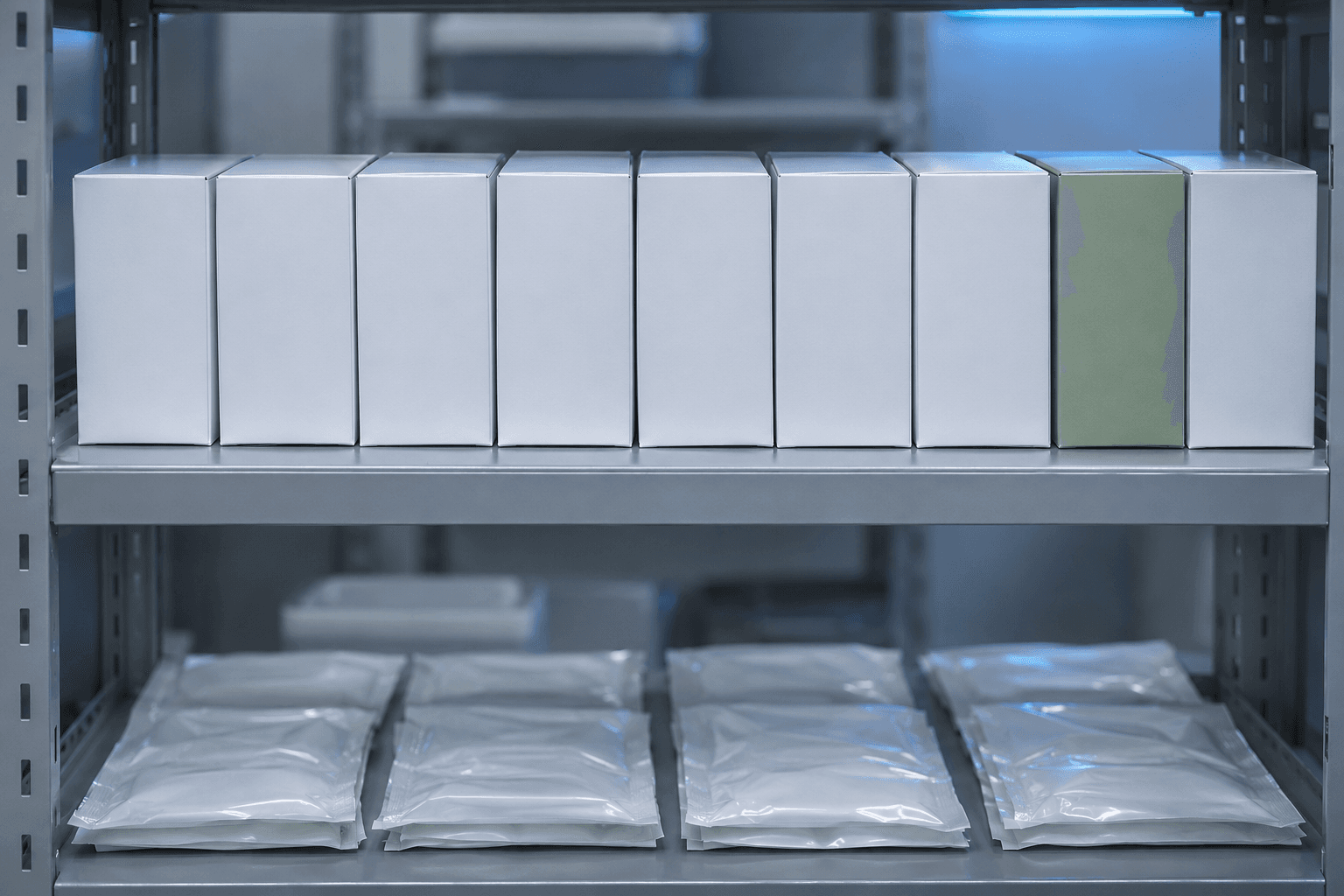
A woman from Singapore, in Seoul for four nights, sits down in my consultation room and turns her phone toward me. On the screen is an English listing for a lifting package that puts Ultherapy, Thermage and Shurink inside one price. At home she has had a treatment called Ultraformer, a name that doesn't appear on the listing. She wants to know whether the three are the same kind of treatment, and which numbers on the listing she can actually compare. The quickest answer is in the equipment room down the corridor, where ultrasound cartridges sit on one shelf and sealed single-use Thermage tips sit on the shelf below.
On this page
- Why one "lifting" menu holds different machines
- Ultrasound or radiofrequency comes first
- Ultrasound machines are read by depth
- Radiofrequency machines are read by tip
- The lifting menu in one table
- Why the prices can't be compared
- How a Korean patient reads the menu
- What to ask in the consultation
- FAQ
Why one "lifting" menu holds different machines
On a Seoul menu, "lifting" is a category, not a treatment. Korean booking apps and guides for visitors put focused ultrasound machines, radiofrequency machines and a microwave machine under the same tab, and then count each machine in its own unit. One English listing for a skin clinic in Seoul counts Thermage, Ultherapy Prime, Shurink Universe and Oligio in "shots." The listing sells InMode FX and Forma by "Full Face." The listing counts Onda in "100,000j" and "40kJ," which are amounts of energy in joules and kilojoules.

Packages for foreign visitors go a step further and put several machines into one price. One lifting package on a booking site for visitors says that Korean nationals can't book it. For one price, the package lists Ultherapy and Thermage in shots and a titanium lifting treatment in kJ. The package adds a skin booster in cc, the cubic centimetres of injected product.
In an earlier series on this blog, I wrote about packages sold to tourists that name a treatment but not the amount. A lifting package can state every amount and still leave you unable to compare, because a shot, a kilojoule and a "full face" don't convert into each other.
On a booking site, the listing does the job of a brochure. Here is what the brochure leaves out. On the listings above, the kind of energy each machine uses is not printed beside its name. When the energy appears at all, it is in a paragraph of description lower down the page. Without the energy, you can't tell which numbers on the page can be compared with each other.
Ultrasound or radiofrequency comes first
Two kinds of energy make up most of the lifting menu. Ultherapy and Shurink use focused ultrasound, often written HIFU, short for high-intensity focused ultrasound. Thermage, Oligio, Volnewmer and InMode use radiofrequency, written RF, which is an electric current that alternates a million or more times a second. Onda uses microwaves, a third kind of energy.
Focused ultrasound works like sunlight through a magnifying glass. The handpiece brings sound waves together at one point under the skin, and the heat forms at that point. The depth of that point is set by the cartridge or transducer on the end of the handpiece. Korea's drug and device regulator describes these machines the same way: they gather ultrasound onto a single point and use that energy to coagulate tissue under the skin. Coagulate means the heat changes the proteins in the tissue, the way heat sets an egg white.
Radiofrequency has no magnifying glass. The current runs through the tissue under the tip, and the tissue resists the current and turns it into heat, the way a thin wire warms up when current passes through it. Under an RF tip, your own tissue plays the part of the wire. There is no single focal point, so an RF machine is not described by one depth. Thermage, Oligio and Volnewmer have a treatment tip, and these machines are described by the tip instead. Each tip has a surface area in square centimetres, and a Thermage tip also delivers a set number of pulses.
In the equipment room of the skin clinic I work at, you can see the difference without switching anything on. The ultrasound cartridges are sorted by depth in millimetres. The Thermage tips are sealed in pouches and sorted by size, and each pouch is opened for one patient and then thrown away. So for an ultrasound machine, ask which cartridge depth will be used, and for an RF machine with a tip, ask which tip.
This article opens a series called Open the Box. In it, Haesa Lee, an optics PhD who builds lasers and doesn't sell them, takes these machines apart one at a time. His note on the physics comes first.
Second opinion. Haesa Lee
Let's open the box. A transducer is the part at the end of an ultrasound handpiece that sends out the sound, and its focus is built into its design, the way a lens has its focus ground into the glass. Ultherapy's 10 MHz transducer, which vibrates 10 million times a second, focuses at 1.5 mm under the skin, and its 4 MHz transducer focuses at 4.5 mm. An RF tip has no focus, and a full-face Thermage tip sends its current across its whole surface of 3.0 or 4.0 cm².
Ultrasound machines are read by depth
Ultherapy and Shurink both focus ultrasound at fixed depths. The depth is built into the part on the end of the handpiece, which Ultherapy calls a transducer and Shurink calls a cartridge.
Ultherapy's maker lists three treatment depths: 1.5 mm in the shallow dermis, 3 mm in the deep dermis, and 4.5 mm at the SMAS. The dermis is the thick middle layer of the skin. The SMAS is a deeper layer of connective tissue that lies over the facial muscles.
Shurink Universe's maker lists cartridges at 1.5, 2.0, 3.0 and 4.5 mm for the face, and at 6.0, 9.0 and 13.0 mm for the body. The maker's page also lists a mode it describes as broad heating, next to the standard dot pattern, and in either mode the cartridge has a depth in millimetres that you can ask for.
Korean booking apps sell both machines in shots. I went through what a shot count does and doesn't tell you in an earlier article on 300 and 600 shot counts. Ultherapy and Shurink use the same kind of energy, so asking both for their depths gives you two answers you can lay side by side. Their shots still aren't the same amount, so compare a shot count only with another listing for the same machine.
Radiofrequency machines are read by tip
Thermage FLX and Volnewmer are monopolar RF machines, in their makers' own words. Monopolar means the current runs from the tip on your face toward a return pad, a separate pad that completes the circuit. Oligio's US clearance lists a return pad as well, and all three machines run at 6.78 MHz. InMode's Forma and FX applicators, the heads that touch the skin, are bipolar and run at 1 MHz. Bipolar means the current runs between two electrodes on the same applicator.
A 2020 review of radiofrequency in aesthetic surgery describes bipolar current as reaching about half the distance between its two electrodes. For you, the point is that the depth of an RF treatment comes from the type of machine and the design of its tip, not from a cartridge with a number on it. The makers' public pages for Thermage and Volnewmer don't give a treatment depth in millimetres.
What the makers do publish is the tip. Thermage FLX has "total" tips of 4.0 and 3.0 cm² for the face, a 0.25 cm² eye tip and a 16.0 cm² body tip. Volnewmer's tips are 0.25, 3.0, 4.0 and 16.0 cm². Oligio X, the newer Oligio, lists tips of 0.25 and 4.0 cm² in its US clearance.
Each Thermage FLX tip is single-use, though the handpiece it fits onto is not. On Seoul menus, Thermage comes as 300, 600 or 900 shots, and a shot count alone doesn't tell you which tip is used.
InMode is sold by area of the face rather than by tip, as in "Partial" or "Full Face." Forma and the FX applicators sit on one US clearance, the InMode RF Multi-System.
Onda's maker, DEKA, classes Onda as a microwave device at 2.45 GHz, or 2.45 billion cycles a second, with two handpieces, Deep and Shallow. The maker's page lists mostly body areas, plus the area under the chin. Listings count Onda in joules rather than shots.
The lifting menu in one table
Some of these machines go by a different name outside Korea. Shurink is the Korean name for the Ultraformer range made by Classys. The maker's own company history writes the pairs out: "SHURINK (ULTRAFORMER III)" and "SHURINK UNIVERSE (ULTRAFORMER MPT)."
Volnewmer, also made by Classys, is sold in the US as Everesse. Oligio kept its name abroad, and its US clearances are filed as "The Oligio" and "Oligio X." Ultherapy and Ulthera are one machine too. The maker markets the machine as Ultherapy, and the US clearance calls the same machine the Ulthera System.
The Ultraformer treatment she had back in Singapore and the Shurink on her listing are models from the same family, made by the same maker.
Ultherapy, Ultherapy Prime
- Name outside Korea: Ultherapy (US clearance: Ulthera System)
- Energy: Focused ultrasound
- What sets where the heat goes: Transducer depth: 1.5, 3.0 or 4.5 mm
- How listings count it: Shots
Shurink, Shurink Universe
- Name outside Korea: Ultraformer III, Ultraformer MPT
- Energy: Focused ultrasound (HIFU)
- What sets where the heat goes: Cartridge depth: 1.5, 2.0, 3.0 or 4.5 mm on the face
- How listings count it: Shots
Thermage FLX
- Name outside Korea: Thermage FLX
- Energy: Monopolar RF, 6.78 MHz
- What sets where the heat goes: Tip: 4.0 or 3.0 cm² for the face, 0.25 cm² for the eyes
- How listings count it: Shots (300, 600, 900)
Oligio, Oligio X
- Name outside Korea: Oligio, Oligio X (same name)
- Energy: RF with a return pad, 6.78 MHz
- What sets where the heat goes: Tip: 0.25 or 4.0 cm² (Oligio X)
- How listings count it: Shots
InMode FX, Forma
- Name outside Korea: InMode (US clearance: InMode RF Multi-System)
- Energy: Bipolar RF, 1 MHz
- What sets where the heat goes: Applicator design
- How listings count it: By area: "Partial" or "Full Face"
Onda
- Name outside Korea: Onda
- Energy: Microwave, 2.45 GHz
- What sets where the heat goes: Deep or Shallow handpiece
- How listings count it: Energy in joules or kJ
Read the table across a row. Before you compare two prices, check that both listings name the same machine and count it in the same unit, and for an RF machine, that they use the same tip.
Why the prices can't be compared
One Korean price platform lists one Thermage FLX session at a far higher price than one Shurink session.
A shot doesn't mean the same thing on every machine, so the shot counts for these two machines can't be compared directly. Shurink comes as 300 shots of focused ultrasound and Thermage FLX as 600 shots of RF through a single-use tip, so a price per shot worked out for Shurink can't be carried across to Thermage FLX. Every Thermage FLX session uses a new tip. What that tip costs, and how it compares with an ultrasound cartridge, is a question for later in this series.
How a Korean patient reads the menu
A Korean patient in her 30s would typically find Shurink on a Korean booking app as a Korean name, a handpiece name and a shot count, such as "Shurink Universe Ultra F 300 shots." One such listing doesn't say HIFU, ultrasound or Ultraformer, and it gives no depth. The listing sells the machine on its own, by shot count, rather than inside a package with other machines.
In my consultation room, Korean patients usually arrive having picked one machine by name, and the questions they bring are about that machine.
What a Korean patient would actually do
A Korean patient in her 30s picks one machine on the app by its Korean name and a shot count, and compares prices only between listings for that same machine. The listing she reads lays out its options that way, with one machine and one shot count per option.
A visitor can do the same with one extra step, which is to translate the name first. Ultraformer at home is Shurink on a Seoul menu, and Everesse in the US is Volnewmer.
What to ask in the consultation
Four questions about the machine itself sort out the lifting menu:
- "Which machine is this, and what is it called outside Korea?"
- "Is it focused ultrasound, radiofrequency or something else?"
- For an ultrasound machine: "Which cartridges or transducers will you use, and at which depths in millimetres?"
- For an RF machine with a tip, such as Thermage, Oligio or Volnewmer: "Which tip will you use, how large is it in cm², and how many shots is the session?"
InMode is sold by area instead, so for InMode, ask which applicator will be used and which areas of the face the price covers.
For Thermage and Volnewmer, ask about the tip rather than a depth in millimetres, because the makers' public pages don't give one.
In the next article in Open the Box, Haesa Lee opens up Ultherapy and Shurink, and what the price difference between those two ultrasound machines buys.
FAQ
Q. Is Shurink the same as Ultraformer?
A. Yes. Shurink is the name used in Korea for the Ultraformer range made by Classys, and the maker's company history pairs Shurink with Ultraformer III and Shurink Universe with Ultraformer MPT. Handpiece names on Korean listings, such as Ultra F, are a separate thing.
Q. Is Shurink HIFU?
A. Yes. The maker describes Shurink Universe as HIFU, high-intensity focused ultrasound, with face cartridges from 1.5 to 4.5 mm. So Shurink is in the same energy group as Ultherapy, though a Shurink shot and an Ultherapy shot are not the same amount.
Q. What is the difference between Oligio and Thermage?
A. They are separate machines from different makers. Both run on RF at 6.78 MHz with a return pad, and both are described by their tips. Oligio's US clearance names Thermage FLX as its predicate, the existing device it was compared against for clearance. Seoul menus sell them as separate options with separate prices.
Q. Can I compare a Thermage price with an Ultherapy price?
A. Not shot for shot. Thermage is RF and is read by its tip, while Ultherapy is ultrasound and is read by its transducer depth, so a shot on one machine and a shot on the other measure different things. Compare a Thermage price only with another Thermage price for the same tip and shot count.
Q. What do "60,000j" and "40kJ" mean on an Onda listing?
A. They are amounts of energy, not shots. Onda is a microwave machine, and listings count a session in joules, written j or kJ, so 60,000j is 60 kJ. Korean apps write the same amounts in jul (줄), the Korean word for joules.
Seoul Skin Log lists all 392 skin clinics in Gangnam, Myeongdong and Hongdae with their ratings and what their Korean reviews say, so you can look a skin clinic up before you ask it about its machines. If a skin clinic you're looking at on Seoul Skin Log names only the machine, send the four questions above through the consultation form, and we ask that skin clinic and pass the answer back.
Get less done than you planned. Your skin will thank you.
Seokwoo Choi · Fifteen years behind a laser in Gangnam
This article is general information, not a medical consultation. Treatment suitability is decided in person after a skin assessment.